Anish Kapoor: Enter The Void
I went to Anish Kapoor’s recent solo exhibition. I usually carry a small notebook to exhibitions to record my thoughts, but this time I forgot it. Instead of observing from a distance, I found myself completely absorbed in the art itself.
The exhibition is a meditation on the idea of the liminal, laid out across five distinct rooms at the Hayward Gallery in London. Kapoor guides us through depthless voids, mirrors, the ancient religious rituals, and the interior body through a range of materials such as large-scale steel mirror sculptures, inflated PVC membrane, sandstone and rocky hills and oil paintings.
Among the most prominent are works produced with Vantablack, a nanotechnology-engineered substance capable of absorbing up to 99.9% of visible light, alongside metal trays holding thickly painted silicone forms, their surfaces caught between ambiguous shades of red and black. The rooms contain works such as All of Nothing (2026), Mount Moriahat the Gate of the Ghetto (2022), Ha Makom (2026), and yet I spent the most time staring into the voids in Room 2.
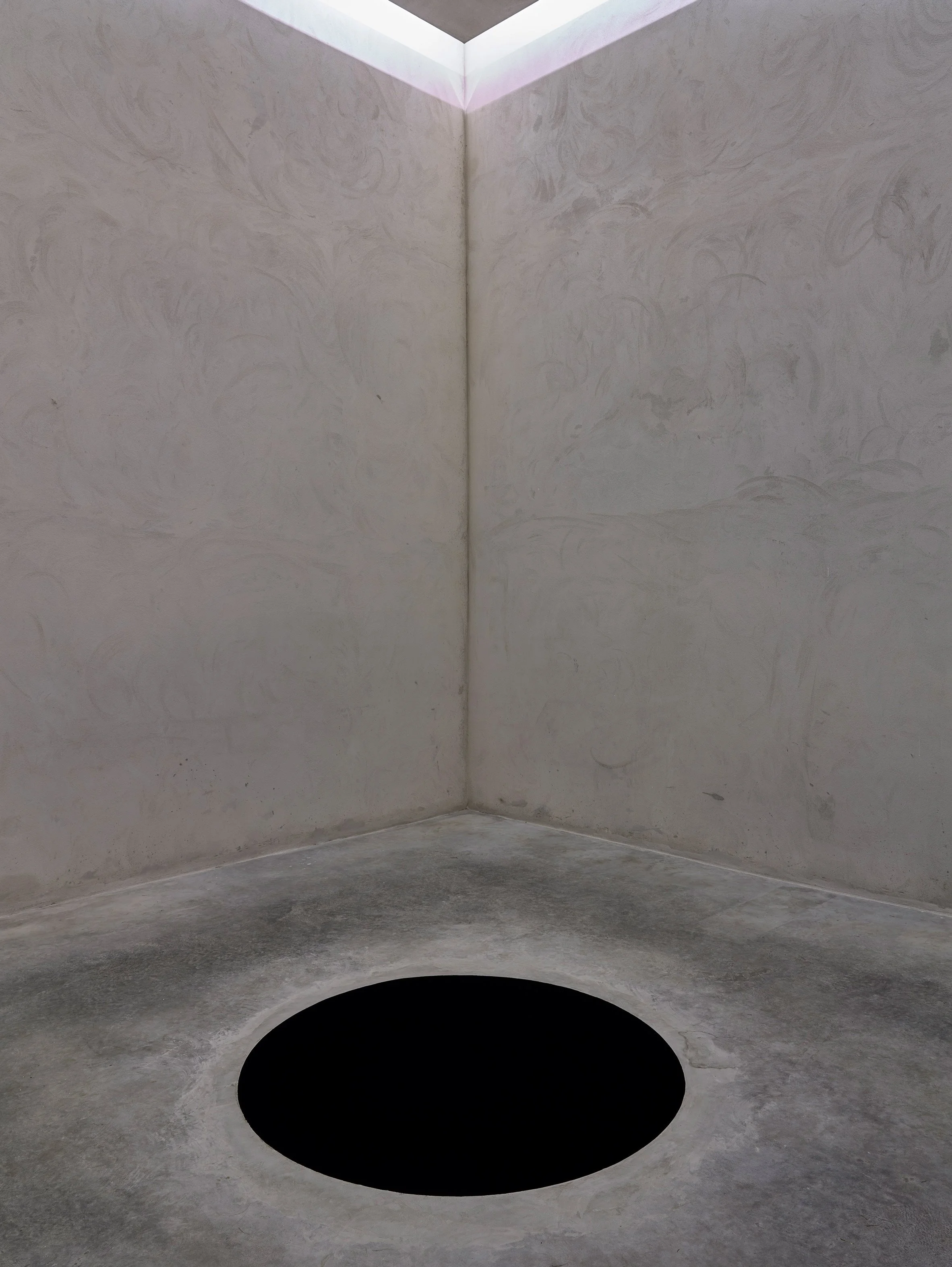
Descent into Limbo (1992) by Anish Kapoor. Photo: Filipe Braga; © Anish Kapoor. All rights reserved, DACS, 2026
There, we wandered through Kapoor’s depthless voids. Positioned at the heart of the room, Descent into Limbo (1992) turned the floor itself into “limbo”, an overwhelming void, a liminal space. To stand at its edge was to be caught between temporal and spatial states of absence and presence. This particular work left me breathless. For a moment, I felt as though I was standing on the edge of a cliff, about to jump off. What came to mind is this feeling sometimes called l'appel du vide [“the call of the void”], that intrusive idea of throwing oneself off. When I first entered the room, this hole, which appeared from a distance as merely a black void, seemed to deepen the closer I got. When I leaned my head in and looked into its dark depths, I couldn't help but feel like I was in Alfred Hitchcock’s Vertigo (1958) and standing at the spiral staircases. I was experiencing a vertigo effect!
The closer I got to that limbo, the more I fell into it. The very sensation of descending affected me physically, even as I knew, somehow my mind was playing a trick on me. Did Kapoor ask whether my physiological response was itself a symptom of some inner void?
I examined the artwork from every angle. I closed my eyes and imagined opening my mouth to scream, and it was strange not knowing exactly where the void gaping from the depths of my throat was going. I technically knew where the throat leads, at least to some degree. But it was nonetheless frightening to think this mechanism actually worked, and that all of this interior was, in a sense, also a void. As I listened to my own heartbeat, I could imagine that it was coming from somewhere deep within, even though I knew it was only blood pumping. Sounds that only I could hear.
Ah! I could never make peace with the void, its emptiness and its nothingness. I can’t even tolerate the idea itself. I suppose this is the human experience: an illusion, a void, a darkness, an inexplicable mystery, a vertigo, but also, somehow, awe.
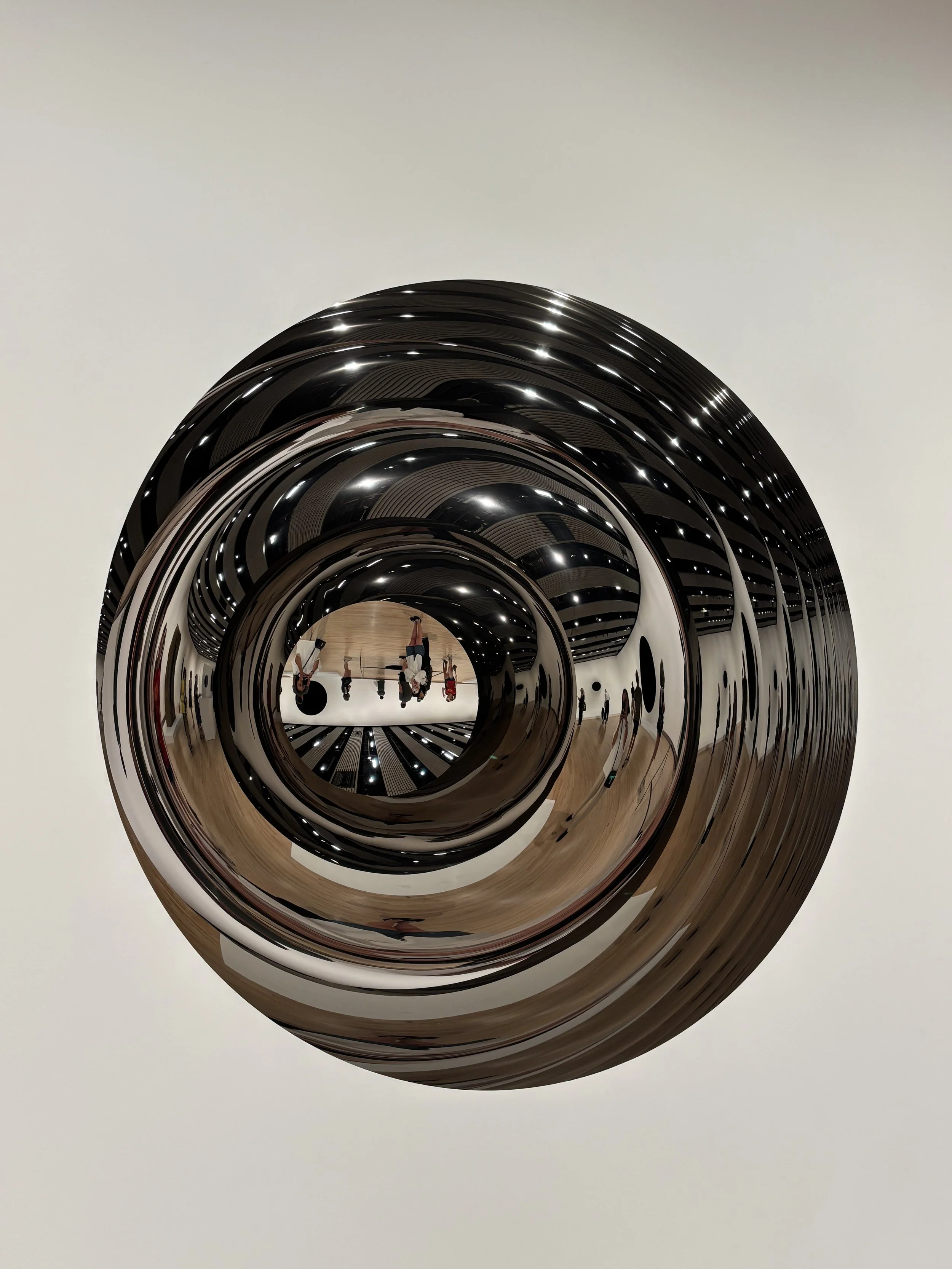
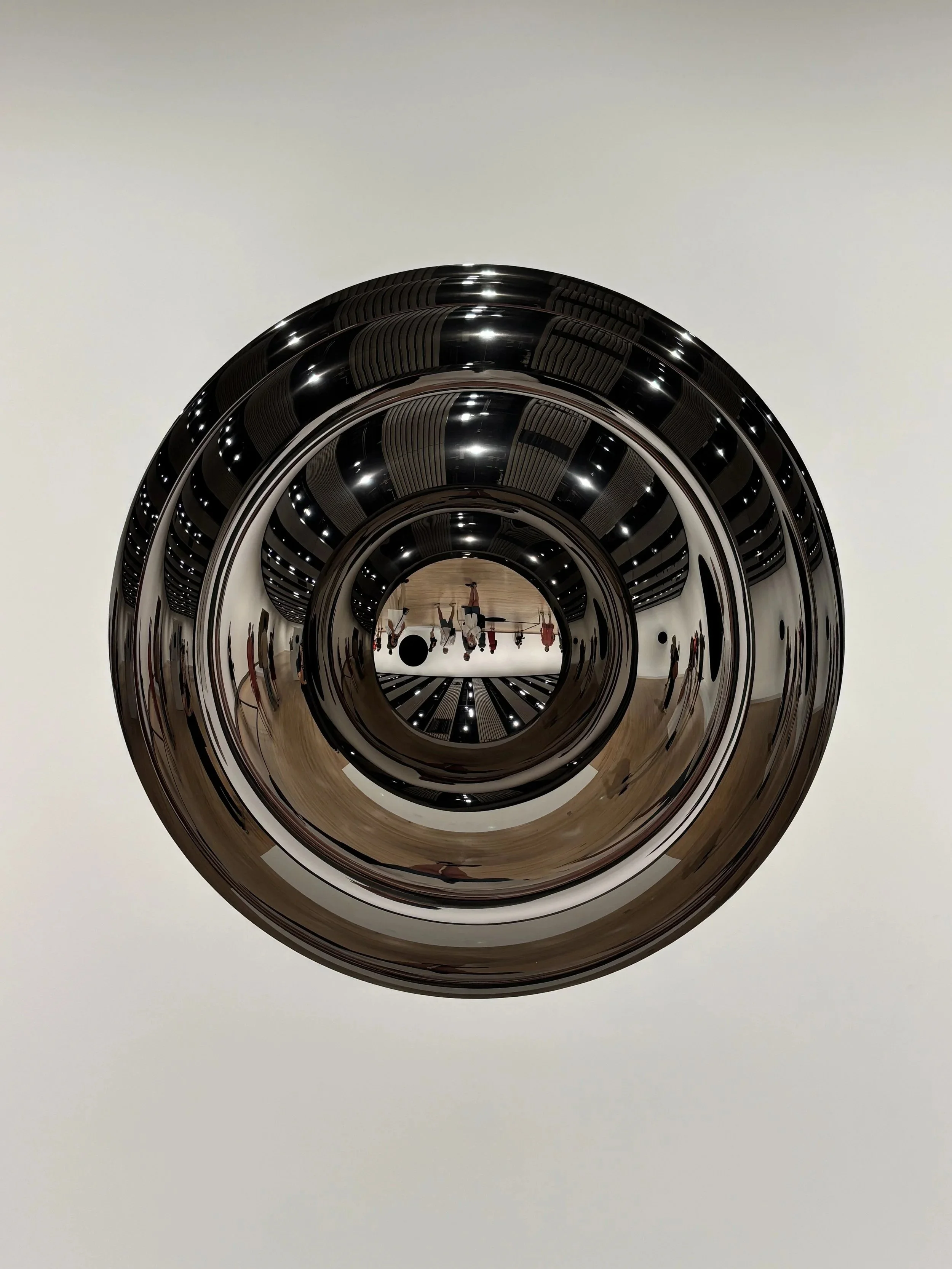
In the same room, I looked at the stainless-steel mirror work, Iris (1998). Now the structure of the void changed: the infinity created by that mirror was also producing a vertigo effect. How could I put it into words? It wasn't about falling into the void and vanishing (that frightened me or the inner void I contemplated). It was the interconnectedness between the same versions of myself, existing at different mirrored angles, upside down, shifting. I saw myself, trapped inside those infinite forms. I wondered what the other spectators, circling around this orbit, were thinking. Did the person next to me feel nauseous too? Perhaps everyone else was experiencing incredible pleasure from all those voids, or maybe they were simply hiding their discomfort, or maybe each of us was trapped in these strange rooms.
I contemplated the self and its infinite versions across different universes when my body was both drifting away and coming closer in that reflection. My head was spinning. These works, created from human imagination, were only designs, and yet became an entire experience. In that particular moment, I lost track of my sense of self. Standing before Iris and watching myself multiply and reverse across its steel surface, or staring into Descent into Limbo and feeling gravity loosen its grip, I could no longer separate myself from what I was looking at.
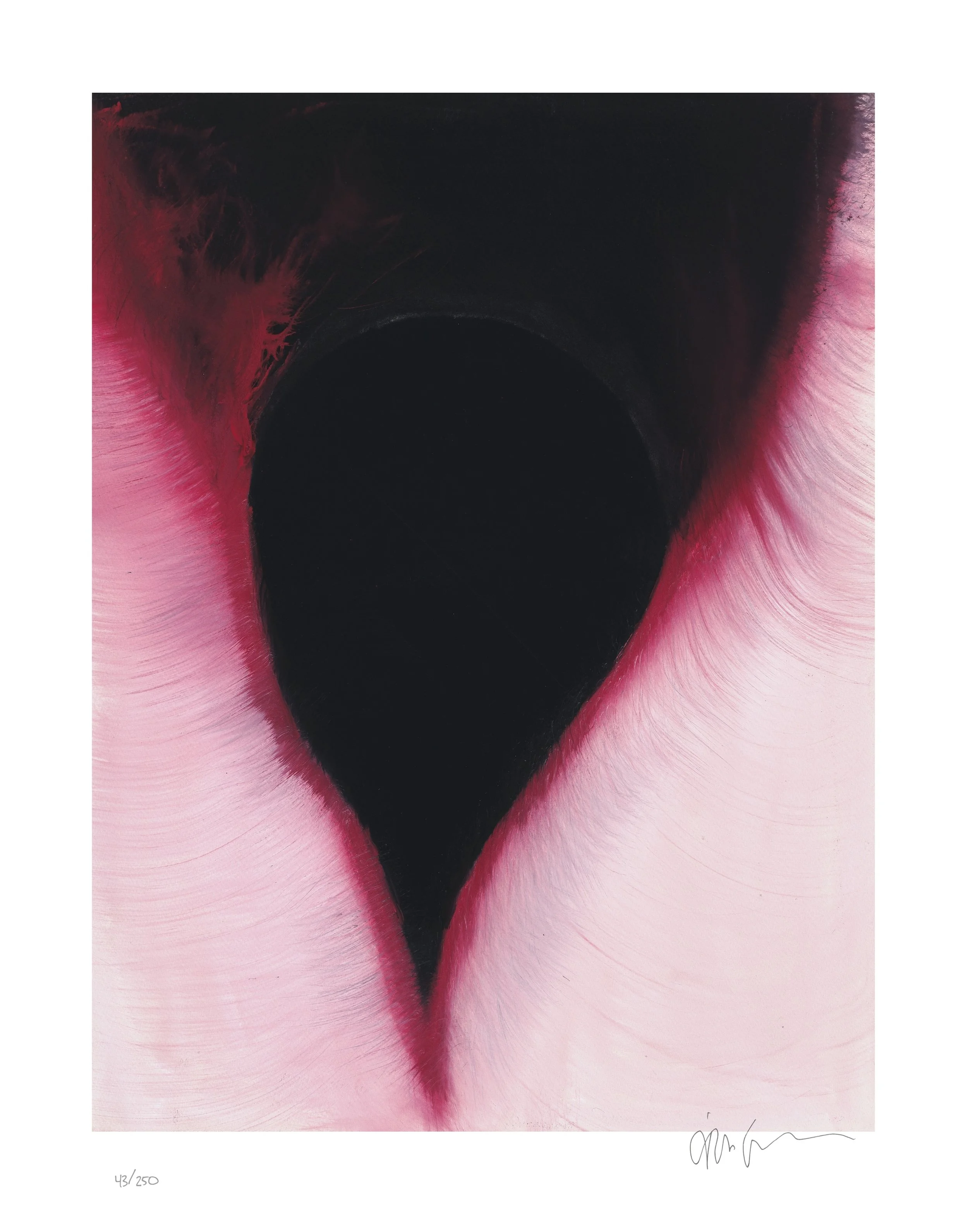
Anish Kapoor, The Dark, 2026
I felt nauseous because of my own dread about the void. I know objects have this kind of power to prove such questions, invoke bodily responses and geometry plays a role in producing that effect. But what I felt, walking around those rooms, was the instinctive urge to finally put into words something that I could only ever sense. My personal epiphany is like those voids I drifted through—thoughts, sensations and feelings all tangled in my mind, reminding me that I am alive and human!
Completely disoriented between matter and the immaterial, being and non-being, object and non-object, I left the exhibition with a question in my head: had I been staring into an artwork, or deep within myself?