Farangiz Yusupova: The Enchantment of Rupture
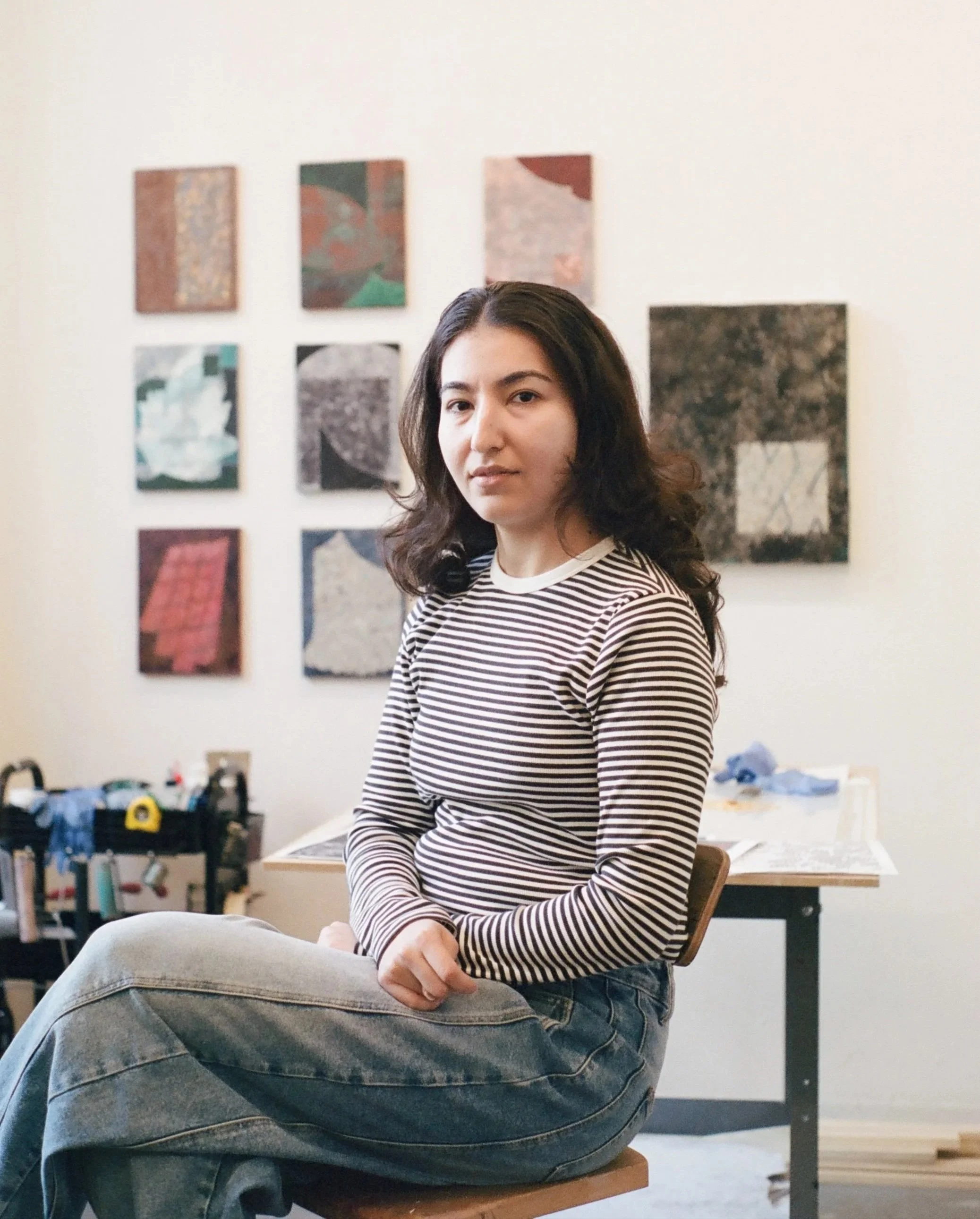
Farangiz Yusupova in her Hunter College studio, 205 Hudson Street, 2025, photo by author
Layers upon layers rest between the surface and inner core of each work by Farangiz Yusupova. Memories, those immaterial relics, woven into the architectural skeleton of silent surfaces. Not the silence of absence, but rather the silence of fossils, of things present but unseen. What remains in the aftermath of life but the ruins of fossilized memory? How do you reconstitute what’s broken? How do you attend to the rupture?
I met Yusupova while doing studio visits for an exhibition I co-curated with Jay Bravo at Hunter College, Worlds on Paper (2025). She’d returned from a semester abroad in Berlin where she learned how to make her own paper. This would become the basis of a new body of work: paintings on paper pulp, mounted on wood, many of which she showed at her solo show There is Light, There is Shadow (2025) at John St Gallery in Brooklyn. All nine by twelve inch textured fragments of what resembled Islamic architectural stone carvings sculpted with a Modernist edge. Close-ups, displaced from larger, imperceptible tapestries. They are beautiful, but often bear markers of decay, oxidation, or erosion, as if scarred by melancholia.
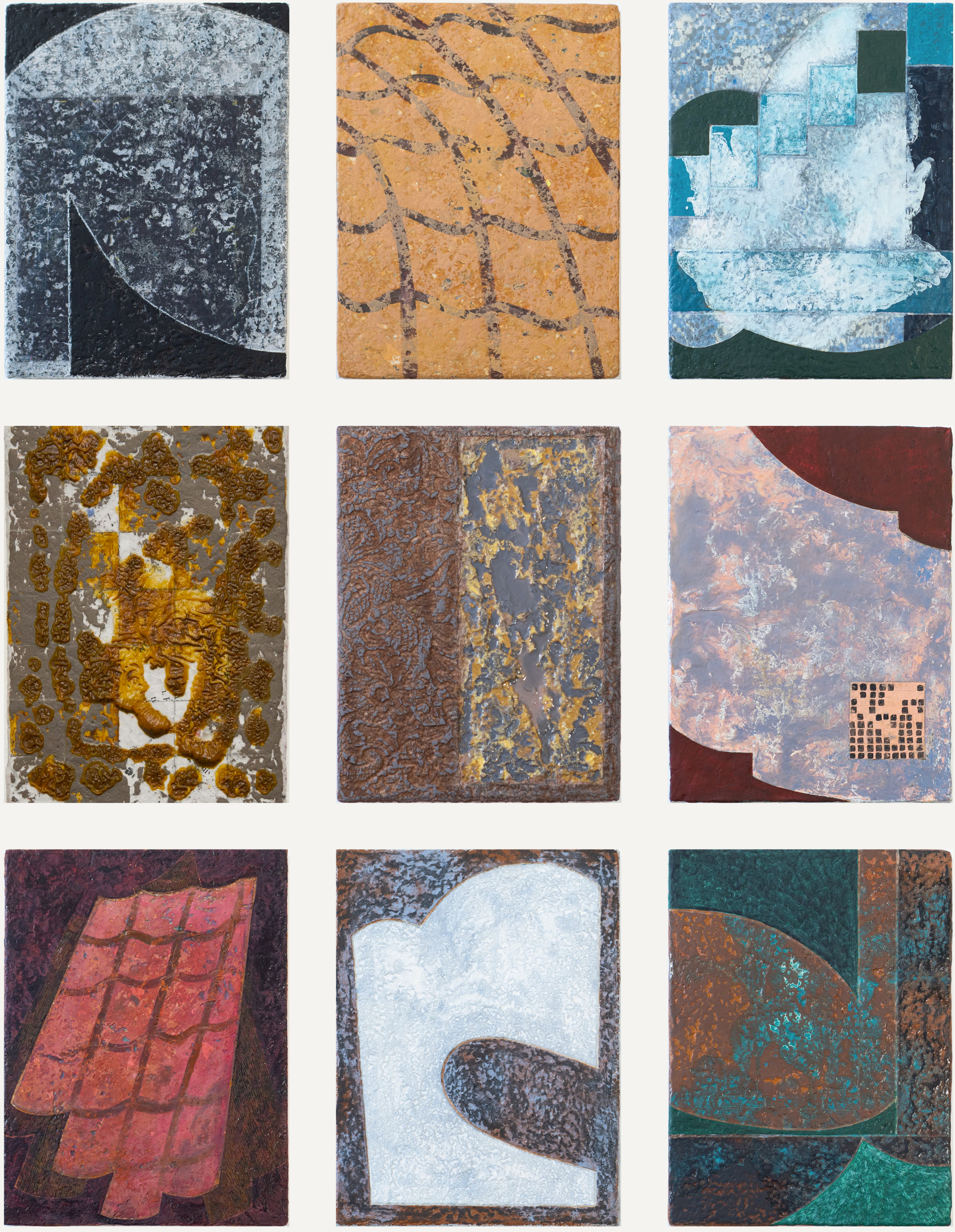
Top left to bottom right: (1) There is Light, There is Shadow, (2) Web, (3) Feruza, (4) Untitled, (5) Rupture, (6) Crimson Curtain, (7) Spotlight, (8) After Matisse’s Yellow Curtain, (9) Phthalo Green, 2025, 9 × 12 inches, oil on paper pulp on wood panel
Yusupova is prone to alchemy—this capacity to transform the mediums she works with. She turns paper into stone and canvases into rugs, for what she seeks lies somewhere in the kingdom of the liminal. Every piece appears as a threshold of some kind: a door, a mirror, a portal, a window. Propositions of mobility, always made inaccessible by some unseen force. Thresholds always come with this paradox. They reify those comforting, false dichotomies—the here and elsewhere, the private and public, containment and escape—which buttress the fantasy of borders. Yet thresholds, we too often forget, are also permeable, porous, relational. A rupture is an opening.
Growing up in Samarkand, Uzbekistan, in traditional patriarchal society, Yusupova’s always been marked by the way power is regimented through space, manifesting through material and ideological infrastructures of control. This interrogation brings to mind other artists like Nadia Kaabi-Linke or Aziz Hazara. Rather than (geo)politics, however, Yusupova is more concerned with the transformation and mythologies of place, and its entanglements with dislocation, migration, and cultural amnesia. This brings her closer to those artists devoted to unsettling the legitimacy of grids, borders, history, and other colonial apparatuses—such as Kamrooz Aram, Simone Fattal, or Zarina. Artists that face melancholia by rebuilding ruptured memory from the ground up.
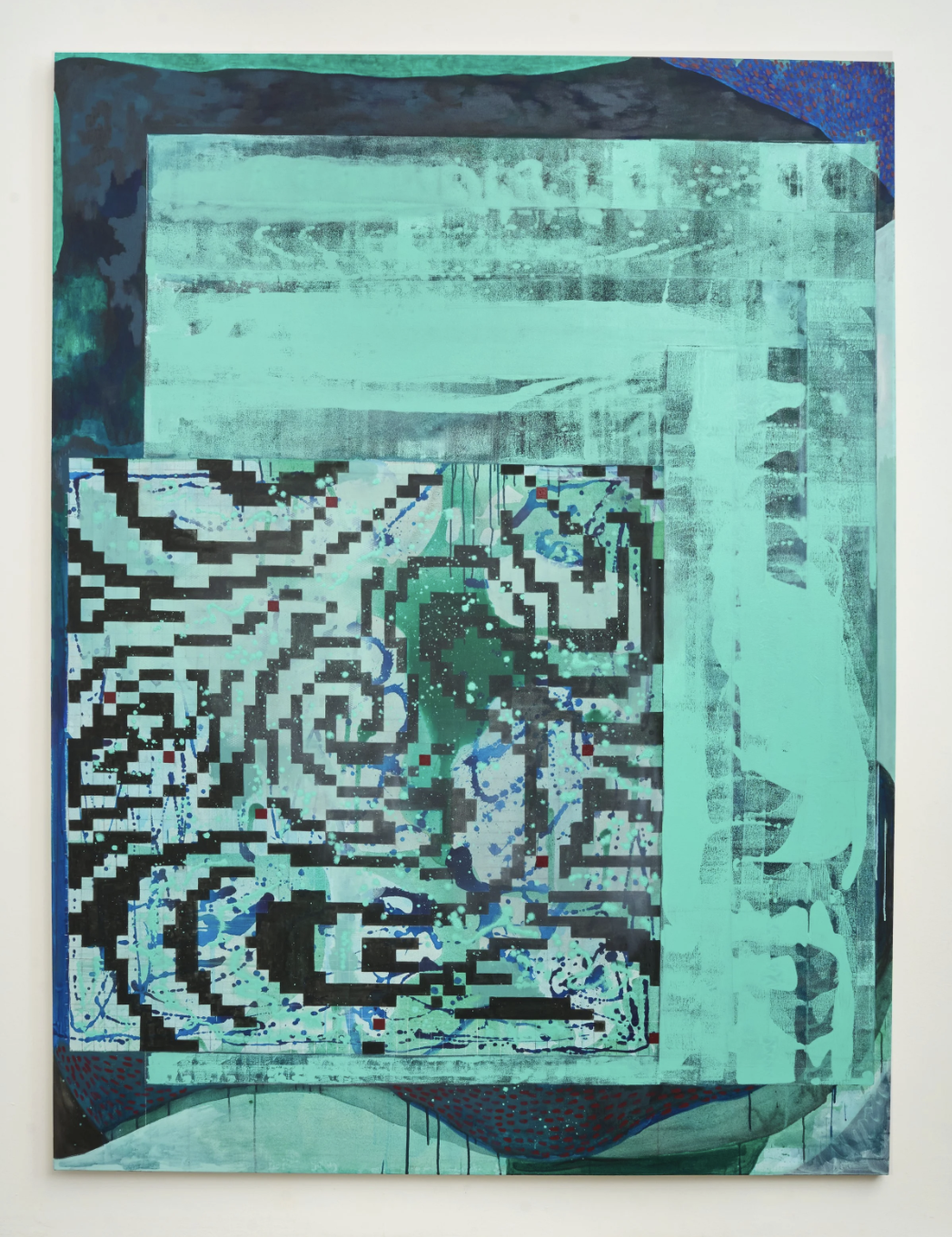
Farangiz Yusupova, Ob, 2026, 96 × 72 inches, oil, acrylic, spray paint and pencil on canvas
The melancholic migrant is always burdened with getting over it, as if migration came with some moral responsibility to forget where you came from, as if it disappeared once you left it. “Don’t get over what is not over,” Sara Ahmed writes. To poet Mahmoud Darwish, there’s a poetics to refusing to get over. “The poetry of exile,” he writes, “is not what exile says to you, but what you say to it, one rival to another. Exile, too, is hospitable to difference and harmony. So fashion yourself out of yourself. And do not forget to thank exile graciously: I will praise you, O exile, where praise becomes you.”
Yusupova’s practice offers that wisdom: learning to embrace distance rather than overcome it. Art that attends to the rupture. A poetry of exile in material form. A refusal to forget.
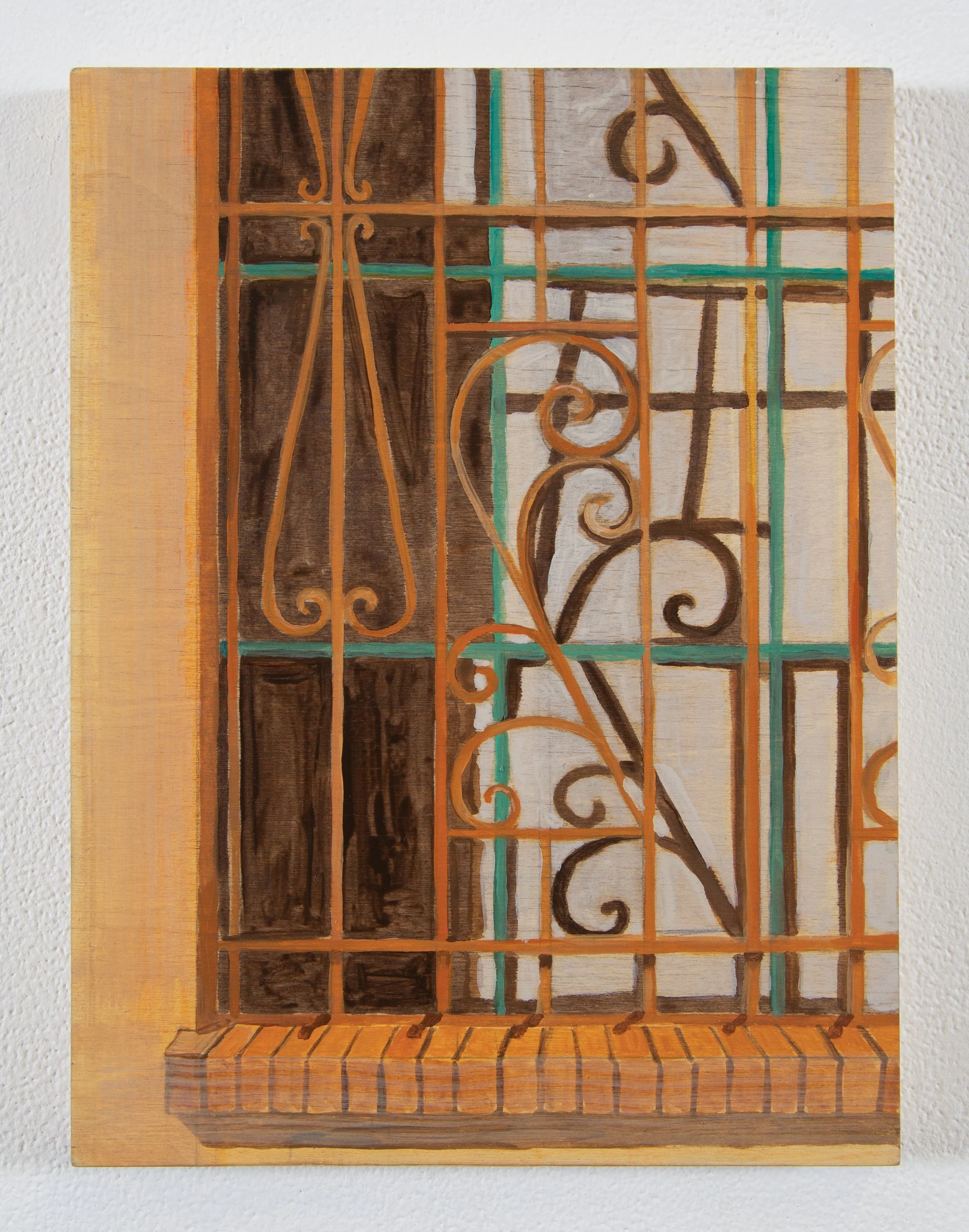
Farangiz Yusupova, Window Grille, 2023, 9 x 12 inches, oil on wood
I’ve been drawn to this oil painting titled Window Grille (2023) for a few years now. It’s an atypical piece for Yusupova, in that it is straightforwardly figurative, albeit compositionally close-cropped. I used to read the painting as a meditation on the dual nature of thresholds, with an ornate barred window serving as a symbolic exploration of the thin frontier between the visible and invisible, safety and imprisonment, the order of grids and the chaos of natural ornaments. But I see it differently now.
Textile artist Cici Osias recently taught me that those metal window guards we find everywhere around New York originated in West African visual symbols of communication. A friend of hers can translate the meaning of almost all of them. I’ve been thinking about that conversation, about the countless symbols that enchant everyday life and yet remain invisible to most. Part of the reason for that is simply loss of knowledge, or at least its erosion. But I think it also stems from a general contemporary disenchantment with the world. A universal loss of innocence, of wonder.
When I was a child, grandma taught me that every leaf is one life reincarnated and that every gem is a soul ascended. I don’t talk to my grandma anymore. Something broke.
The word ‘rupture,’ in my native French, also refers to a break-up. I like how translation sometimes helps us see things as they truly are. The ruptures of migration, displacement, exile, gentrification are not just wounds to heal, they’re break-ups to grieve. I likely find comfort in Yusupova’s work because it yearns to honor the love we cultivated with the spaces we lost, while at peace with the finality of their passing.
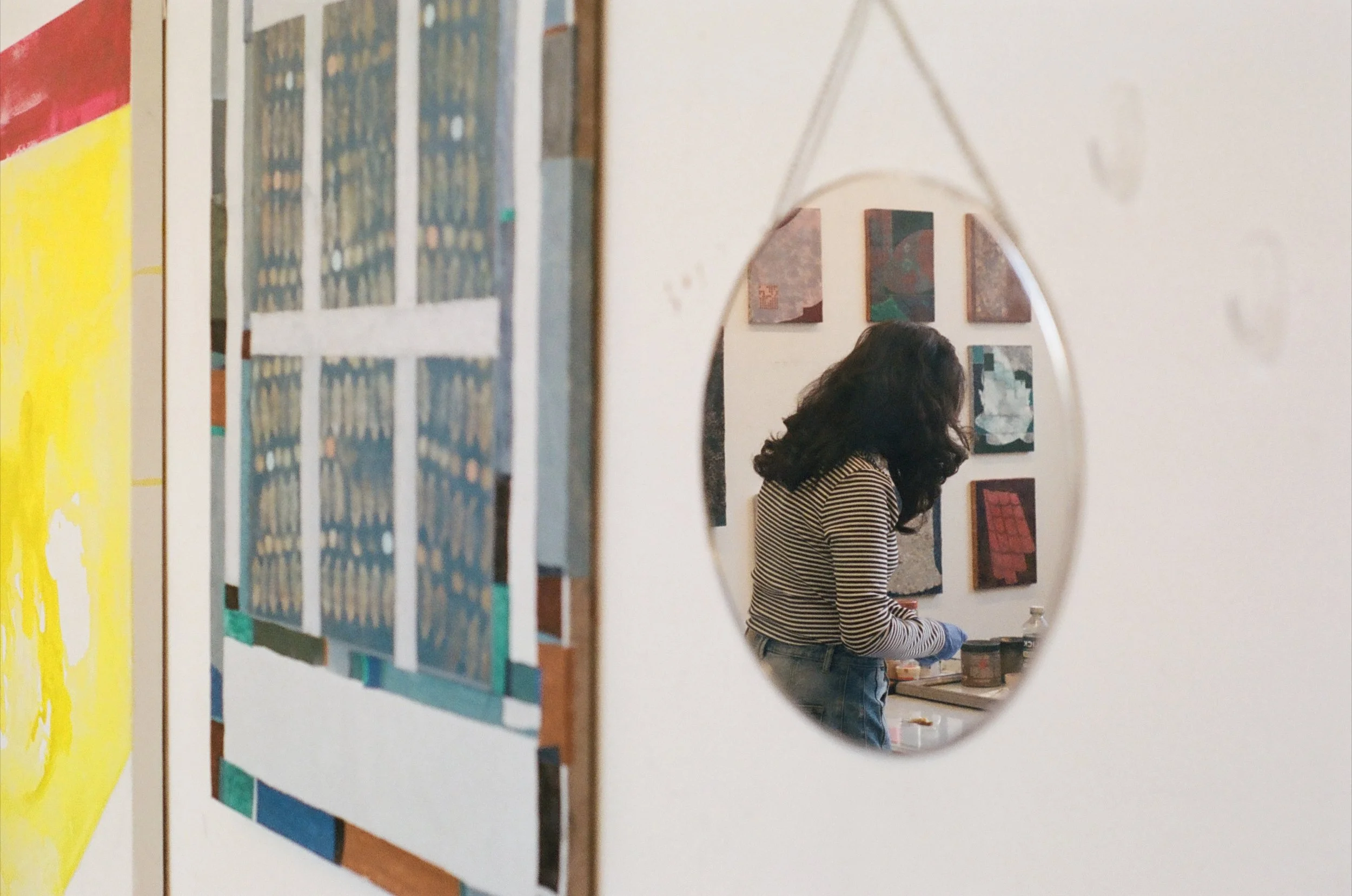
Farangiz Yusupova in her Hunter College studio, 205 Hudson Street, 2025, photo by author
Yusupova went back to Uzbekistan in 2024 and took photos of her grandmother’s home. It was worn out, but filled with fossils of past life, with door fragments reworked as structural support for the broken ceiling. You can always mend the rupture. There are always new secrets yet to be unearthed, offerings to reunite us with our ancestors and those things we used to love. Look back with tenderness. There, that’s enchantment.